Postural orthostatic tachycardia syndrome, or POTS, is a debilitating condition that robs sufferers of things big and small, every day. The ability to hold a job. A night out with friends. Basking in a nice, hot shower. Clarity of thought. But it does not steal the strength it takes to define themselves. Faces of POTS carries a powerful message: We are much more than our diagnosis.
Collaborating with Dysautonomia International, award-wining photographer Adam Jacobs, himself a POTS sufferer, captured 28 faces – resilient, fierce, curious people –
to help raise awareness about POTS. Here are their faces and their stories.
Postural orthostatic tachycardia syndrome, or POTS, is a debilitating condition that robs sufferers of things big and small, every day. The ability to hold a job. A night out with friends. Basking in a nice, hot shower. Clarity of thought. But it does not steal the strength it takes to define themselves. Faces of POTS carries a powerful message: We are much more than our diagnosis.
Collaborating with Dysautonomia International, award-wining photographer Adam Jacobs, himself a POTS sufferer, captured 28 faces – resilient, fierce, curious people –
to help raise awareness about POTS. Here are their faces and their stories.


What is POTS?
-
POTS severity can range from mild to very severe.
-
POTS is a disabling neurological condition that impacts an estimated 1-3 million Americans, making it more than twice as common as multiple sclerosis. The disability is comparable to that of congestive heart failure or COPD.
-
POTS can impact people of any age or gender, but over 90% of patients are women between the ages of 12 and 50.
-
POTS is estimated to affect 1 in 100 teens according to the Mayo Clinic, and half of POTS patients develop it in adulthood.
-
POTS patients endure an average four-year delay in diagnosis.
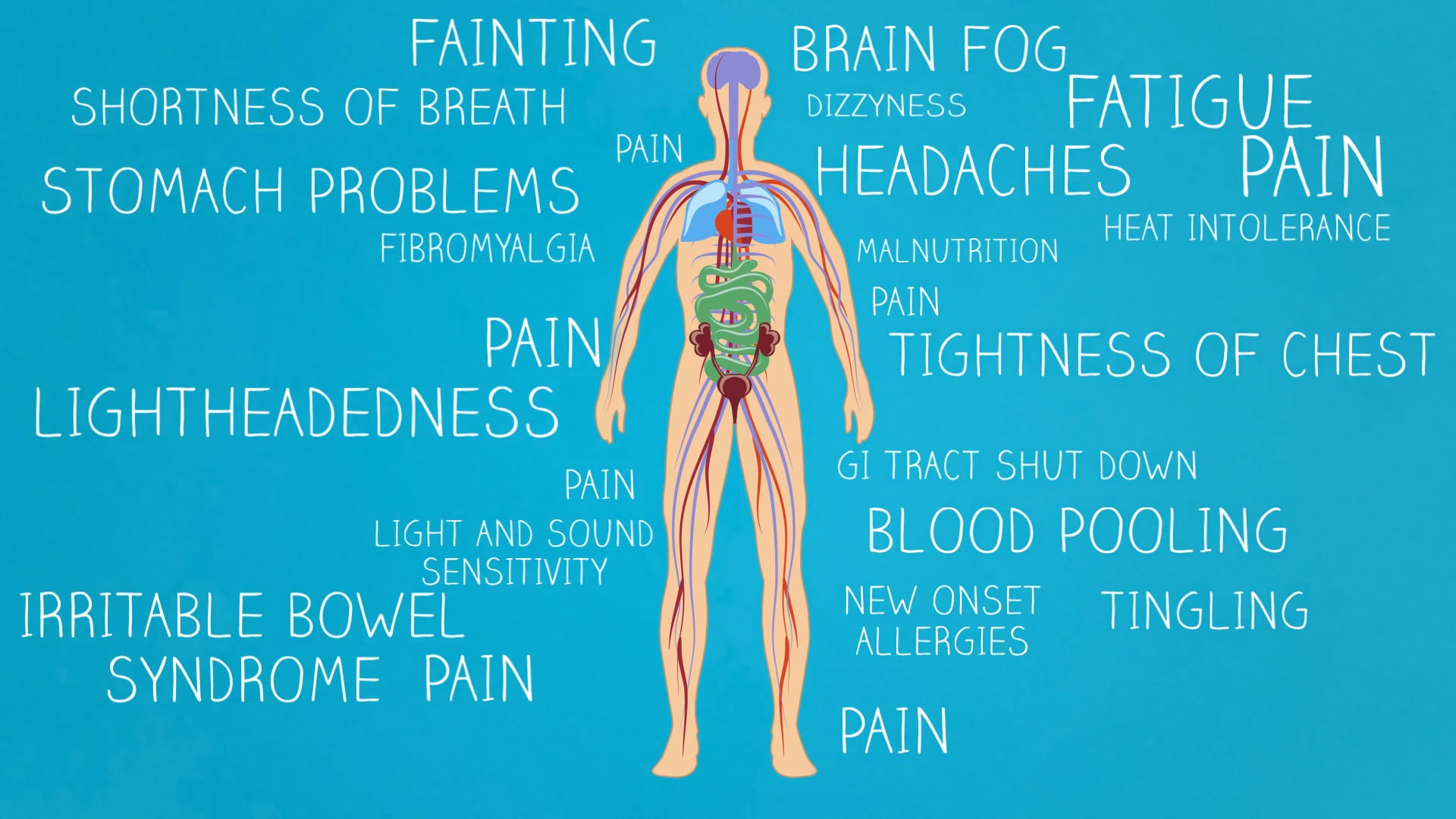
Postural orthostatic tachycardia syndrome (POTS) is caused by a malfunction of the autonomic nervous system which controls all of the involuntary functions of the body such as heart rate, blood pressure, temperature control, digestion, respiration, kidney function and more.
-
trouble concentrating
-
a very fast heart rate
-
chest pains
-
shortness of breath
-
GI dysmotility
-
and much more...
POTS symptoms can include:
-
lightheadedness
-
fainting
-
profound fatigue
-
headaches
-
migraines
-
nausea
Learn more about POTS from Dysautonomia International.
What is POTS?
Please share this video to help raise awareness about POTS. Help us find better treatments for POTS and eventually a cure by contributing to Dysautonomia International's POTS Research Fund.